

- Advantages of Renting in Punta Cana
- Advantages of Buying in Punta Cana
- Which Area Should You Choose?
- So, Buying or Renting in Punta Cana: Which Is Right for You?
- FAQ: Buying or Renting in Punta Cana
- Is it better to buy or rent in Punta Cana as a new resident?
- How much can I earn renting out a property in Punta Cana?
- What is the CONFOTUR Law and how does it help buyers?
- Do foreigners pay the same taxes as locals when buying in Punta Cana?
- Is renting a safer option than buying in Punta Cana?
- What should I check before renting a property in Punta Cana?
Buying or renting in Punta Cana? Here’s exactly how to decide.
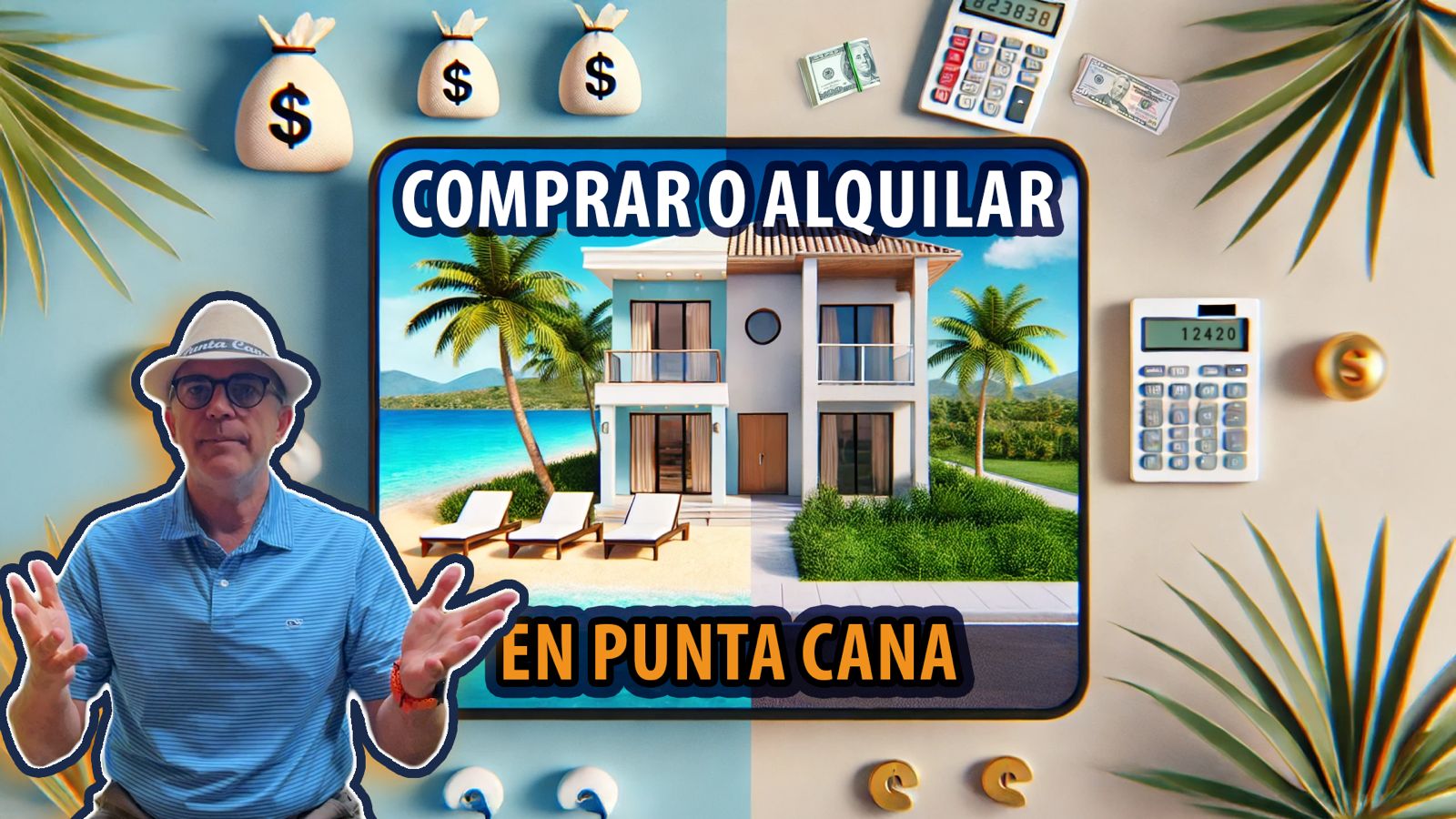
If you are considering moving to the tropical paradise of Punta Cana, one of the first decisions you will have to make is: buy or rent? This is a question I frequently receive from expats and new residents. In this video, we will analyze the advantages and disadvantages of each option and give you recommendations so you can make the best decision according to your needs. Stay until the end to find out what suits you best!
Advantages of Renting in Punta Cana
Let’s start with the advantages of renting in Punta Cana.
- Flexibility: If you are new to the area, renting allows you to explore different locations such as Bávaro, Cap Cana, or Vista Cana before committing to a purchase.
- Lower initial investment: With a security deposit and the first month’s rent, you can settle in without having to spend a large amount of money upfront.
- Furnished options: Many rentals in Punta Cana come fully furnished, which reduces additional costs.
- Ideal for temporary stays: If you plan to stay for less than a year or are exploring the idea of moving permanently, renting is the most practical option.
If you decide to rent, look for properties with clear contracts and make sure to work with reliable agents to avoid surprises.
Advantages of Buying in Punta Cana
Now let’s talk about the advantages of buying a property in Punta Cana.
- Long-term investment: Properties in Punta Cana have high appreciation value due to constant tourism growth and development in the area.
- Passive income: You can rent out your property when you’re not using it, especially during high seasons, through platforms like Airbnb.
- Tax benefits: The CONFOTUR Law exempts certain tourist projects from property and rental taxes for up to 15 years.
- Stability: Buying gives you a sense of ownership and allows you to personalize your home according to your preferences.
Imagine buying an apartment in Cocotal for $200,000 USD. With vacation rentals, you could generate up to $1,500 USD per month in income — see our full Airbnb income guide for real numbers. If you want to learn how to legally avoid property taxes for up to 15 years, read our guide on the CONFOTUR Law, the tax incentive regulated by the Dominican Ministry of Finance.
Which Area Should You Choose?
If you are not yet familiar with the areas of Punta Cana, here are my recommendations:
- Rent first: If you are unsure where you want to live, renting for 6 months will give you time to explore places like Cocotal, Cap Cana, or Bávaro and decide which one best suits your lifestyle.
- Make a priority list: Consider factors such as proximity to schools, supermarkets, restaurants, or the beach before committing to a purchase.
- Talk to local residents: They can give you a clearer idea of the advantages and challenges of each area.
- Consult experts: Working with a real estate agent who knows the area well will help you find options that suit your needs.
So, Buying or Renting in Punta Cana: Which Is Right for You?
So, what is the best option?
- If you are new to Punta Cana or looking for flexibility, renting is an excellent way to start.
- But if you are already familiar with the area and plan to stay long-term, buying a property will offer you financial benefits and stability.
Remember that each case is unique, so evaluate your needs, budget, and goals before making a decision. Before deciding, check our breakdown of the hidden costs when buying in Punta Cana so there are no surprises.
Do you have questions about renting or buying in Punta Cana? Leave them in the comments or contact me directly. We are here to help you find your home in paradise. Don’t forget to subscribe for more real estate and Caribbean lifestyle tips!
FAQ: Buying or Renting in Punta Cana
Is it better to buy or rent in Punta Cana as a new resident?
If you’re new to the area, renting for the first 6-12 months is usually the smarter move — it lets you explore neighborhoods like Bávaro, Cap Cana, or Cocotal before committing to a purchase.
How much can I earn renting out a property in Punta Cana?
A well-located apartment purchased for around $200,000 USD can generate up to $1,500 USD per month through vacation rentals during high season, though actual returns vary by property and management.
What is the CONFOTUR Law and how does it help buyers?
CONFOTUR is a Dominican tax incentive that exempts qualifying tourist real estate projects from property and transfer taxes for up to 15 years, significantly improving investment returns.
Do foreigners pay the same taxes as locals when buying in Punta Cana?
Yes, foreigners and Dominicans are subject to the same property and rental tax rules. You can check current rates on the official DGII website.
Is renting a safer option than buying in Punta Cana?
Renting carries less commitment and no upfront capital risk, but buying — done with a clear contract and verified title — offers stability, appreciation, and rental income potential that renting can’t match.
What should I check before renting a property in Punta Cana?
Always request a clear written contract, confirm the landlord’s identity and ownership, and work with a reliable local agent to avoid common rental scams.
Thinking about investing in the Dominican Republic?
Get a professional, no-pressure opinion before you decide. Write to me directly and I'll help you analyze your case.